
Bessent's Buyback Awakens Bitcoin
After the announcement of expanded long-term Treasury buybacks, the U.S. 30-year yield fell to 5.18% before rebounding to 5.23% the next day. This article breaks down the channels behind the contemporaneous rise in gold and Bitcoin into debt management, the dollar, short covering, and a separate policy catalyst.
- By
- Sungnavi
- Published
- Updated
- 9 min read
- 9 min read
- U.S. long-term Treasuries
- 30-year Treasury yield
- Treasury buybacks
- U.S. Treasury
- gold prices
- Bitcoin
- U.S. dollar
- corporate bond issuance
- fiscal deficit
In this article
On August 23, 2026, immediately after U.S. Treasury Secretary Bessent announced an expansion of long-term Treasury buybacks, markets displayed unusual price movements. The 30-year Treasury yield seemed to dip briefly, only to rebound almost immediately, while gold and Bitcoin, which had been quiet, began climbing sharply. Bessent’s attempt to support Treasury prices effectively flipped a switch that sent money into alternative assets instead.
The U.S. Treasury’s expectation that buying 2x as much in 30-year U.S. Treasuries would lower yields did not survive beyond a day. The market correctly saw that a buyback does not reduce the debt itself; at the same time, a policy catalyst that could be read as positive for Bitcoin coincided with short covering.
Why Did Bessent’s Gambit Misfire?
Bessent announced on August 19, 2026, that the buyback program would be expanded at least twofold to support liquidity in long-term Treasuries. The expanded operation was officially scheduled to begin on September 9. As of the announcement date, it was only a future plan, and no actual execution figures had been confirmed. Even so, the U.S. Treasury market appeared to react sensitively immediately after the announcement.
The U.S. 30-year Treasury yield fell by roughly 0.10 percentage points, from the previous day’s closing level of 5.28% to 5.18% immediately after the announcement on the 19th. But the calm did not last long. On the next day, August 20, the yield rebounded to 5.23%, reversing a significant portion of the initial decline in just one day. (Why Treasury Secretary Bessent’s moves to calm the bond market haven’t worked so far)
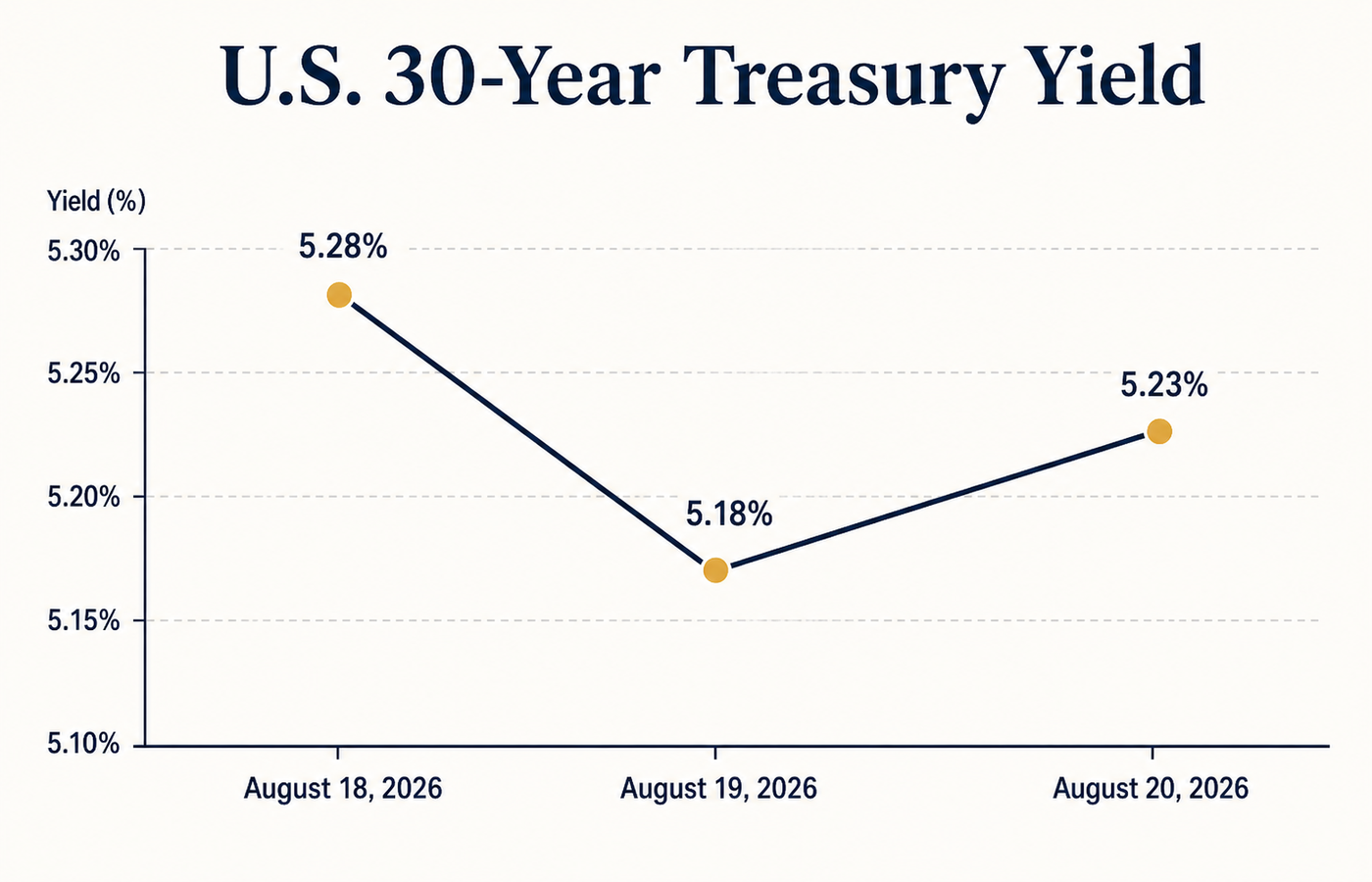
The decline in long-term Treasury yields thus lasted exactly one day. At first, the news that the Treasury would buy long-term bonds—the 2x buyback—seemed to stimulate buying interest. But it was not enough to persuade a market well aware of the huge fiscal deficit and Treasury supply burden weighing on bonds. The WSJ and other media outlets even used provocative headlines such as “Bessent’s humiliation” to convey a sense of crisis surrounding the state of U.S. Treasuries.
Is the Buyback Just Shuffling Debt Around?
Treasury purchases are often mistaken for something akin to a central bank’s quantitative easing (QE), but their funding source and borrowing effect are entirely different. According to the U.S. Treasury’s official explanation, long-term Treasuries bought back through the program are replaced by new Treasury issuance, so the total amount of net marketable borrowing held by private investors does not change. (Treasury Announces Marketable Borrowing Estimates)
For a buyback to amount to QE, new money would need to be created to purchase Treasuries. In practice, however, outstanding securities are bought back and new securities are issued after the maturity and liquidity mix is adjusted—a debt-shuffling operation. Buying a particular long-term issue can support its price and temporarily lower its yield, but new bond issuance follows, leaving the government’s overall funding burden unchanged.
It was later reported, however, that Bessent did not invoke the buyback solely to lower long-term rates. His plan is to buy back 30-year bonds and sell short-term bills in their place. Those short-term bills are also a strategic move aimed at the stablecoin market, leaving aspects of his strategy that warrant further observation before it is dismissed as simple debt shuffling.
At any rate, the market reacted sensitively at this point. The message that the Treasury would support long-term bond prices provided short-term relief, but it was also read as an urgent signal that controlling long-term rates had become desperate enough for the Treasury itself to intervene. The question, “Why go that far now?” stirred market concerns about fiscal soundness and currency debasement. Instead of producing lower long-term yields, it flipped a switch that drew money into other asset markets.
Why Gold and Bitcoin Rose Together
As long-term Treasury yields and the value of the dollar fell together on the day of the buyback announcement, market funds immediately moved into alternative assets such as gold and Bitcoin. According to AP reporting, gold prices rose by more than 2% on August 19 alone. Bitcoin surged by more than 20% over the 5 days from August 17 through 21, exceeding $77,000 on August 21. (How bitcoin and gold went from a slump to an MVP week in just a few days)
The prices of the two assets began rising at nearly the same time, but the forces driving them and their persistence differed. The measurement periods must be distinguished first. Gold’s move was a one-day response on the announcement date, while Bitcoin rose over 5 days. Placing the two assets on the same footing and comparing them directly could create a misleading impression because their internal drivers differed from the outset.
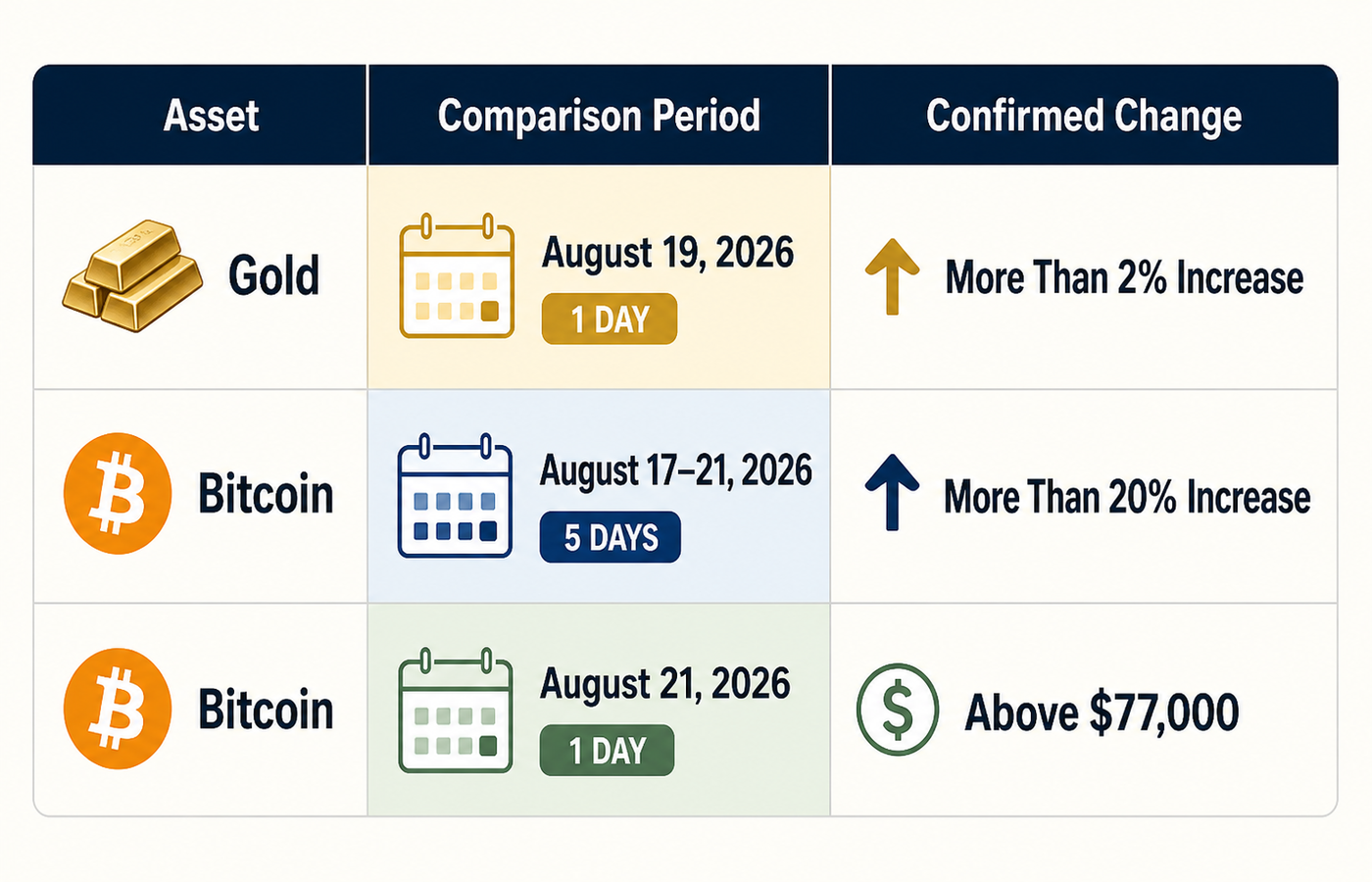
Gold’s rise can be explained in traditional terms as a flight to safety, while Bitcoin had its own drivers. As it broke above the upper end of a trading range that had been dull for some time, forced liquidation of short positions—a short squeeze—caused buying pressure to surge in the short term. A pro-crypto policy event held on the very day of the buyback announcement also prompted an interpretation that its timing was a calculated move by the administration to dramatically expand a new source of demand for U.S. Treasuries, further stimulating investor sentiment. The Treasury’s buyback announcement ignited the chain reaction affecting both assets, but this is why Bitcoin’s entire surge cannot be attributed to the buyback alone. (How bitcoin and gold went from a slump to an MVP week in just a few days)
An attempt to lower Treasury yields led to dollar weakness and greater preference for alternative assets. With derivatives-related supply and demand specific to each asset added to the mix, gold and Bitcoin—two very different alternative assets—experienced a complex surge in prices.
The Persistent Forces That Pushed Long-Term Yields Back Up
Four structural factors lay behind the rebound in the 30-year Treasury yield after just one day: the U.S. government’s enormous fiscal deficit, large-scale corporate bond issuance by Big Tech companies to fund AI data center investment, persistent inflation risk, and uncertainty about confidence in the Federal Reserve’s monetary policy. (Why Treasury Secretary Bessent’s moves to calm the bond market haven’t worked so far)
The government and Big Tech are competing in the bond market for a limited pool of long-term capital. This creates an irony in which the U.S. government’s determination to develop AI as a national strategic industry instead makes it harder for giant technology companies to secure funding. For companies, higher financing costs have raised the required-return hurdle for investment. Corporate bonds issued to build data centers compete with Treasuries, becoming a boomerang that pushes Treasury yields higher.
This trend also passes directly to households carrying mortgages and investors in long-term bonds. High rates remaining in place for longer increase households’ mortgage interest burden and can accumulate valuation losses for existing holders of long-term bonds. (Of course, the currently verified data do not include specific lending rates or profit-and-loss figures for pensions and funds. The direction of transmission should therefore be monitored, but the precise scale of the burden must be confirmed through data compiled in the future.)
What Four Treasury–Alternative Asset Combinations Signal About the Next Phase
The U.S. government’s debt has reached its limit, while hyperscalers are making astronomical investments. Together, these conditions are creating a considerable sense of crisis behind the appearance of spectacular growth. Against this backdrop, the relationship between the 30-year Treasury yield and gold and Bitcoin can serve as a compass for understanding the broad direction of the macroeconomy ahead.
First is the combination in which the 30-year yield and gold and Bitcoin all rise. A sustained rise in the 30-year yield means that the market has reached a classic phase of “fiscal dominance,” in which confidence in Treasuries is shaken by accumulating fiscal deficits and inflation concerns. If alternative assets rise even as bond prices fall, it ultimately means that capital seeking protection from declining currency value is fleeing into alternative assets.
Next is the case in which the 30-year yield falls while gold and Bitcoin rise. Dollar weakness and expectations of monetary easing combine to make liquidity abundant across the market, creating a scenario that can satisfy all market participants. This is a favorable liquidity-driven market in which lower rates give wings to both risk assets and alternative assets.
Third is a situation in which the 30-year yield and gold and Bitcoin all decline. It occurs when fear of a deflationary recession, in which money itself dries up across the market, takes hold. Asset prices broadly undergo a correction as investors retreat solely into cash and ultra-short-term safe assets such as MMFs and RPs, marking an extreme phase of contraction.
The final case is one in which Treasury yields and alternative assets both exhibit extreme volatility. Policy credibility fractures while a liquidity squeeze takes hold, leaving market participants unable to judge direction amid chaos. It carries the risk of rapid capital flight and successive forced liquidations in U.S. equities and traditional financial markets.
On the September 9 Buyback Execution Date, How Many Days Can Market Yields Hold?
As the market’s attention turns to September 9, 2026, when the expanded buyback is scheduled to begin, the key indicators to examine are the actual purchase volume and targeted issues, the 30-year yield’s reaction immediately after execution, and the number of days the effect persists. Until execution begins, the announced plan and observed results must be assessed separately and strictly.
When examining changes in gold and Bitcoin prices, data covering identical periods with matching start and end points must also be compared. It is essential to track separately whether the dollar and long-term Treasury yields move together, the liquidation of short positions in the Bitcoin market, and the impact of policy events.
The essential thing to watch is not the figures of 5.18% or 5.23% themselves. It is how long market yields remain stable after the expanded buyback is implemented. If the effect once again lasts only a single day, the Treasury’s intervention will merely have bought the market a brief pause rather than changed the current of interest rates, and the flow of money toward alternative assets may prove difficult to reverse.
One point, however, must not be overlooked: “Could Bessent, a seasoned veteran of the bond market, really have failed to anticipate this?” Even if he accepted that the decline in long-term yields would be only a fleeting event, what he is targeting may lie somewhere else. Sending freshly minted short-term bills, rather than stale long-term bonds, to some new source of demand—and carefully working to expand that source worldwide. Could the buyback have been just one small move toward that end? ▣
References
US stocks halt their slide after the Treasury Department moves to ease pressure from the bond market
Why Treasury Secretary Bessent’s moves to calm the bond market haven’t worked so far
How bitcoin and gold went from a slump to an MVP week in just a few days